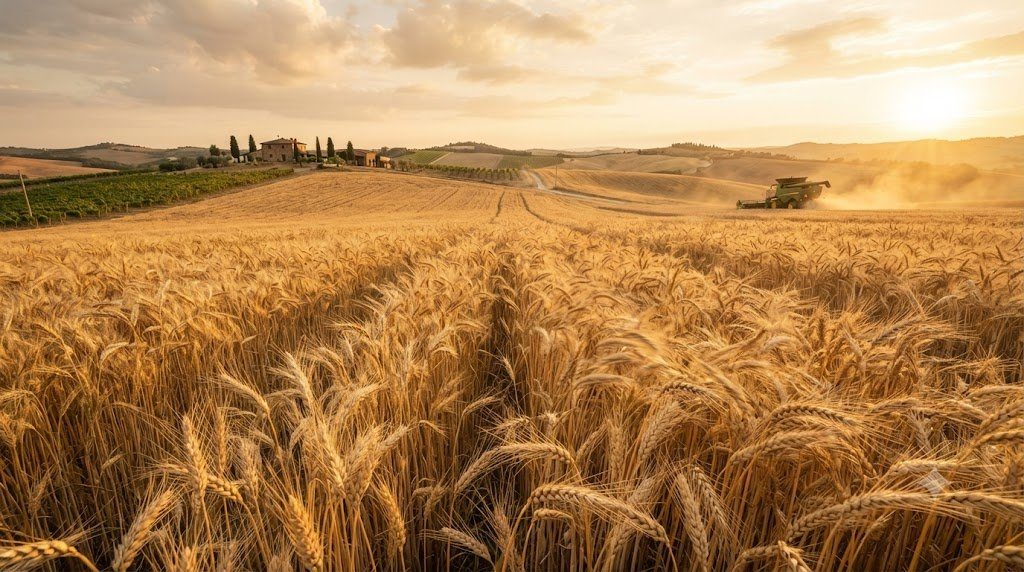
The Global Staple: Botanical Foundations of Triticum aestivum
Bread wheat (Triticum aestivum) is the cornerstone of human civilization and global caloric security, providing over twenty percent of the daily dietary calories and consumable protein consumed by mankind. As an annual, hexaploid cereal grain belonging to the family Poaceae, wheat represents a masterclass of botanical evolution and selective breeding. From its wild ancestral hybridization in the Fertile Crescent between Triticum turgidum and Aegilops tauschii to modern elite semi-dwarf cultivars, the crop has been genetically transformed to maximize harvest index, photosynthetic sink capacity, and milling quality.
In modern high-yield agronomy, maximizing wheat productivity requires far more than casual seed broadcasting and routine broadcast fertilization. Sustainable yield optimization demands an intimate comprehension of plant phenology, canopy architecture, light interception dynamics, tiller fertility rates, and the metabolic biochemistry of starch and storage protein synthesis within developing endosperm tissue. Cultivars must navigate regional abiotic stresses: early-season frost, mid-season drought, and late-season terminal heat stress that arrests grain filling prematurely.
In this comprehensive agronomic treatise, we deconstruct the physiological phases of the wheat lifecycle using the internationally recognized Zadoks Decimal Scale, evaluate the biomechanics of canopy light interception, analyze nitrogen assimilation kinetics, model flag leaf senescence dynamics, explore endosperm starch granule accumulation, detail micronutrient tissue thresholds, and outline precision harvest moisture management.
‘In bread wheat, the uppermost leaf—the Flag Leaf (Leaf 1)—along with the ear head and peduncle, produces up to 65% to 75% of the total carbohydrates deposited into the grain during the grain-filling period. Keeping the flag leaf green, erect, and completely free from fungal foliar pathogens (such as stripe rust and Septoria tritici blotch) is the single most decisive factor determining final thousand-grain weight.’
The Zadoks Phenological Scale: Developmental Chronology
Precision crop management requires tracking developmental milestones via the Zadoks Decimal Scale (Z10 to Z99) rather than chronological days after sowing, as environmental temperatures and photoperiod drive physiological transitions:
- Germination and Seedling Emergence (Z00 to Z19): Imbibition of soil moisture triggers the embryo to secrete gibberellic acid (GA), activating aleurone layer synthesis of alpha-amylase to mobilize stored endosperm starches. The radicle emerges, followed by the coleoptile and primary seminal roots, which establish initial seedling anchoring and uptake of soil moisture.
- Tillering Dynamics and Crown Development (Z20 to Z29): Beginning at the three-to-four leaf stage, axillary buds at basal nodes develop into primary and secondary tillers. Under optimal conditions, a single wheat plant can produce 6 to 12 tillers; however, in high-density commercial stands (300 to 400 plants per square meter), intense competition for photosynthetically active radiation (PAR) causes subordinate tillers to abort, leaving 2 to 4 productive fertile tillers per plant that bear harvested ears. Crown root initiation during this window establishes secondary anchorage and long-term nutrient uptake capacity.
- Stem Elongation and Jointing (Z30 to Z39): The transition from vegetative to reproductive growth. The growing point (apical meristem) transitions into a microscopic immature ear head and elevates above the soil surface. Zadoks 30 (pseudo-stem erection) and Zadoks 31 (first node detectable above ground) represent critical chemical windows for plant growth regulator (PGR) applications and split nitrogen top-dressing. Canopy biomass accumulation accelerates exponentially.
- Booting and Heading (Z40 to Z59): The developing spike swells within the sheath of the flag leaf (the ‘boot’). As the peduncle elongates, the ear emerges completely from the flag leaf sheath (Z50 to Z59). During this phase, floret primordia undergo meiosis; water stress or temperature extremes can cause floret abortion and permanently truncate grain number per head.
- Anthesis and Flowering (Z60 to Z69): Extrusion of bright yellow anthers marks anthesis. Wheat is predominantly a self-pollinating species (> 98%). Fertilization occurs within hours, initiating the irreversible countdown of grain filling. Temperatures exceeding 32°C during anthesis cause severe tapetal cell degeneration and pollen sterility.
- Grain Milk, Dough, and Ripening (Z70 to Z99): Division of endosperm nuclei transitions into cellular starch and protein accumulation. The grain moves through watery ripe, milk, soft dough (Z85), hard dough (Z87), and physiological maturity (Z91), marked by the loss of green chlorophyll in the peduncle and the formation of a dark pigment layer at the grain crease.
| Zadoks Growth Stage | Phenological Event | Primary Physiological Activity | Critical Management Action | Primary Yield Component Formed |
|---|---|---|---|---|
| Z13 – Z21 | Seedling 3-Leaf to 1st Tiller | Crown root development, early vegetative biomass | Post-emergence broadleaf & grass weed herbicide | Plants per unit area established |
| Z30 – Z31 | Jointing (1st Node Detectable) | Ear head initiation, internode elongation | Primary nitrogen top-dressing (Urea/UAN) | Potential spikelets per ear determined |
| Z37 – Z39 | Flag Leaf Emergence | Canopy closure, maximal PAR interception | Preventative fungicide application for foliar rusts | Grain number per ear capacity finalized |
| Z61 – Z65 | Anthesis (Mid-Flowering) | Pollen shedding, ovule fertilization | Scout for Fusarium head blight; avoid water stress | Seed set efficiency and grain number |
| Z73 – Z85 | Milk to Soft Dough Stage | Linear starch deposition, endosperm cell expansion | Ensure soil moisture; monitor for heat shock | Thousand Grain Weight (TGW) accumulated |
| Z91 – Z93 | Physiological Maturity | Cessation of dry matter translocation; grain moisture < 20% | Plan combine harvest logistics; verify grain moisture | Final harvestable grain yield realized |
Canopy Photosynthesis and Radiation Use Efficiency (RUE)
In high-yielding wheat environments, total biological grain yield is a direct mathematical function of intercepted solar radiation and Radiation Use Efficiency (RUE):
Modern semi-dwarf cultivars (carrying Rht1 or Rht2 dwarfing genes) feature an erectophile canopy architecture. Unlike floppy, planophile ancestral leaves that shade lower canopy layers, erect flag leaves allow solar photons to penetrate deep into the middle and lower canopy layers. This vertical light distribution maximizes the whole-canopy photosynthetic rate, maintaining a Leaf Area Index (LAI) of 5.0 to 7.0 at anthesis without inducing premature bottom-leaf senescence.
Furthermore, wheat ears themselves perform active C3 photosynthesis. Ear bracts (glumes, lemmas, and awns) capture light and assimilate carbon dioxide while re-fixing up to 50% of the carbon dioxide respired by developing grains within the enclosed spikelet micro-environment. Awned cultivars demonstrate significant yield advantages over awnless lines in drought-prone, hot climates because awns possess high stomatal density and maintain transpiration cooling under thermal stress.
Photosynthetic nitrogen use efficiency (PNUE) in the flag leaf is governed by the allocation of nitrogen to Rubisco and thylakoid light-harvesting complexes. Approximately 50% of soluble leaf protein is concentrated within Rubisco. When canopy nitrogen status is optimized, carbon assimilation rates reach 25 to 30 micromoles of $CO_2$ per square meter per second under full solar irradiance.
Nitrogen Assimilation Dynamics and Split-Application Chemistry
Nitrogen (N) is the master regulator of wheat vegetative biomass, tillering survival, and baking protein quality. However, applying excessive nitrogen at planting leads to lodging, heightened fungal pressure, and severe environmental leaching:
- The Nitrate-Ammonium Uptake Pathway: Wheat roots absorb nitrogen primarily as nitrate ($NO_3^-$) and ammonium ($NH_4^+$). Once inside root cells, nitrate is reduced to nitrite by cytosolic Nitrate Reductase, transferred into plastids to form ammonium via Nitrite Reductase, and incorporated into amino acids (glutamine and glutamate) through the GS-GOGAT (Glutamine Synthetase – Glutamate Synthase) cycle.
- The Split-Application Triad:
- Starter Dose (Sowing): 15% to 20% of total N budget placed in bands near the seed to support seminal root growth and early tiller initiation without inducing salt injury to emerging radicles.
- Main Vegetative Split (Z30 – Z31 Jointing): 50% to 60% of total N applied just as internode elongation begins. This supports rapid stem expansion, increases spikelet count per ear, and ensures high chlorophyll density in expanding upper leaves.
- Late Reproductive Split (Z39 Flag Leaf / Z50 Heading): 20% to 25% of total N applied as liquid UAN or foliar urea. Because structural yield potential (grains per square meter) is already locked, late-applied nitrogen is translocated directly into synthesized gluten proteins (gliadins and glutenins), elevating grain protein concentrations to the 12.5% to 14.5% threshold demanded by commercial bread millers.
- Nitrogen Use Efficiency (NUE) Optimization: Utilizing polymer-coated slow-release urea or urease inhibitors (such as NBPT) and nitrification inhibitors (such as DCD) slows the volatilization of ammonia gas and suppresses nitrate leaching during wet spring precipitation events.
Micronutrient Dynamics: Zinc, Manganese, and Boron Biofortification
While nitrogen, phosphorus, and potassium form the structural macronutrient baseline, grain filling efficiency and enzymatic stability in wheat are profoundly governed by trace micronutrient availability:
- Zinc (Zn) Catalysis and Carbonic Anhydrase: Zinc acts as an indispensable cofactor for carbonic anhydrase, RNA polymerase, and superoxide dismutase (SOD). In calcareous alkaline soils (pH > 7.5), zinc precipitation as zinc hydroxide or carbonate causes interveinal chlorosis in younger leaves. Foliar applications of chelated Zn-EDTA (0.5 to 1.0 kg/ha) at the tillering and boot stages enhance auxin synthesis, maintain cell membrane integrity, and significantly biofortify endosperm zinc concentrations for human dietary benefit.
- Manganese (Mn) and Thylakoid Water Oxidation: Manganese is the functional core of the oxygen-evolving complex in Photosystem II. In high organic matter or over-limed soils, manganese deficiency leads to ‘grey speck’ lesions and impairs electron transport, lowering whole-canopy radiation use efficiency. Applying foliar manganese sulfate ($MnSO_4$) at jointing restores photosynthetic electron flux.
- Boron (B) and Pollen Tube Viability: Boron is essential for cross-linking rhamnogalacturonan II in cell walls and synthesizing borate-ester complexes necessary for pollen germination. Boron deficiency during floret meiosis causes defective anther development, leading to widespread floret sterility and poor grain set per spike. Applying solubor boron before flag leaf emergence prevents male sterility in sandy, leached soils.
Grain Filling Biochemistry: Starch Granule Synthesis and Gluten Deposition
The grain-filling period represents a massive, highly regulated sink-source translocation sprint lasting 30 to 45 days post-anthesis:
- Sucrose Translocation via Phloem: Carbon fixed in the flag leaf and green glumes is synthesized into the disaccharide sucrose. Sucrose is loaded into the phloem companion cells, translocated down through the vascular bundles of the rachis, and enters the grain’s maternal crease tissue, unloading into the apoplast before being transported into endosperm cells by specific sucrose transporter proteins (SUTs).
- A-Type and B-Type Starch Granule Synthesis: Inside endosperm amyloplasts, sucrose is cleaved into hexose sugars and converted by the enzyme ADP-Glucose Pyrophosphorylase (AGPase) into ADP-glucose. Starch synthases and branching enzymes then polymerize linear amylose and branched amylopectin:
- A-Type Granules (Large, Lenticular): Synthesized during the first 15 days post-anthesis, reaching 20 to 35 microns in diameter. These comprise approximately 70% of total mature starch weight and provide gelatinization properties during baking.
- B-Type Granules (Small, Spherical): Initiated 15 to 30 days post-anthesis, measuring 2 to 10 microns. The ratio of A-to-B granules dictates flour water absorption kinetics and bread dough rheology.
- Gluten Protein Storage (Gliadins and Glutenins): In the rough endoplasmic reticulum, storage proteins accumulate into dense protein bodies. Monomeric Gliadins confer dough viscosity and extensibility, while high-molecular-weight polymeric Glutenins form intra- and inter-chain disulfide bonds that give bread dough its unique structural elasticity and gas-retaining gluten matrix.
Abiotic Stress Physiology: Terminal Heat Shock and Drought Dynamics
Across global wheat belts, terminal heat stress (temperatures exceeding 30°C / 86°F during grain filling) is the primary climate factor reducing thousand-grain weight:
- Thermal Inactivation of Soluble Starch Synthase: Soluble starch synthase (SSS) is an extremely heat-labile enzyme. When ambient temperatures surpass 32°C to 34°C, SSS undergoes thermal denaturation, losing over 70% of its catalytic activity. Sucrose entering the grain cannot be converted into starch, causing the grain to mature shriveled and lightweight.
- Stem Water-Soluble Carbohydrate (WSC) Mobilization: In well-managed wheat, non-structural carbohydrates (fructans) are stored in the parenchyma cells of the stem internodes prior to flowering. If drought or terminal heat destroys flag leaf photosynthesis, an elite cultivar can remobilize these stored stem fructans, converting them back into sucrose and pumping them into developing grains. Stem reserves can buffer and contribute up to 30% to 50% of final grain weight under severe post-anthesis drought stress!
- Exogenous Mitigation: Applying exogenous foliar potassium nitrate ($KNO_3$), salicylic acid, or glycine betaine prior to heat spikes reinforces cell membrane stability, upregulates heat shock proteins (HSPs), and preserves photosynthetic electron transport within chloroplast thylakoid membranes.
Integrated Pest, Disease, and Lodging Architecture
Protecting yield potential requires aggressive field agronomy and chemical vigilance throughout the growing season:
- Foliar Rust Complex Management: Stripe rust (Puccinia striiformis), leaf rust (P. triticina), and stem rust (P. graminis) cause catastrophic yield crashes by destroying leaf photosynthetic tissue. Applying preventive triazole (such as tebuconazole) or strobilurin fungicides at flag leaf emergence (Z39) protects the upper canopy throughout grain filling. Fungicide resistance management requires rotating chemical modes of action (FRAC codes 3, 7, and 11).
- Fusarium Head Blight (Scab) Control: Caused by Fusarium graminearum during warm, wet anthesis. The fungus infects flowering spikelets, producing bleaching and accumulating the dangerous mycotoxin Deoxynivalenol (DON / Vomitoxin) in harvested grain. Target prothioconazole or metconazole sprays precisely at early flowering (Z61) using forward-and-backward angled spray nozzles to cover both faces of the vertical wheat ear.
- Lodging Prevention via Plant Growth Regulators (PGRs): High nitrogen and dense canopies increase the risk of stem base lodging (stem buckling under wind and rain). Applying anti-gibberellin PGRs (such as Chlormequat chloride or Trinexapac-ethyl) between Z30 and Z32 shortens and thickens basal internodes, increasing stem diameter, cell wall lignification, and lodging resistance.
- Weed Competition Dynamics: Aggressive grass weeds like ryegrass (Lolium multiflorum), wild oats (Avena fatua), and canarygrass (Phalaris minor) compete vigorously for tillering space. A programmed pre-emergence herbicide like pyroxasulfone combined with post-emergence ALS or ACCase inhibitors provides season-long weed control.
Harvest Logistics, Grain Quality Standards, and Storage Mechanics
Harvest timing directly impacts commercial grain grading, test weight, and milling value:
- Target Harvest Moisture: Harvest wheat when grain moisture reaches 13.5% to 14.5%. Harvesting above 15% requires artificial heated aeration drying to prevent mold; harvesting below 11% leads to excessive mechanical shattering losses at the combine cutter bar and brittle kernel cracking during threshing.
- Test Weight (Bulk Density): Premium commercial bread wheat requires a minimum test weight of 76 to 78 kg/hL (58 to 60 lbs/bushel). Low test weight indicates poor grain filling, disease infection, or pre-harvest sprout damage.
- The Hagberg Falling Number (Pre-Harvest Sprouting): If rain falls on ripe wheat before harvest, grains begin premature germination, synthesizing the enzyme alpha-amylase. Alpha-amylase liquefies starch, ruining bread dough. The Falling Number test measures the time required for a plunger to drop through a heated flour paste. Milling quality mandates a Falling Number strictly > 250 to 300 seconds; grain falling below 200 seconds is downgraded to livestock feed at severe financial loss.
- Safe Long-Term Aerated Storage: Stored grain must be rapidly cooled to below 15°C using ambient aeration fans to arrest insect reproduction (Rhyzopertha dominica and Sitophilus oryzae) and prevent fungal mycotoxin proliferation. Regular grain coring and phosphine fumigation ensure insect-free storage integrity.
| Management Domain | Target Benchmark | Agronomic Tool / Protocol | Primary Economic Risk If Neglected |
|---|---|---|---|
| Seedbed Preparation | Firm, weed-free seedbed; 3-4 cm sowing depth | Calibrated air seeder with press wheels | Uneven emergence, poor seminal root anchoring |
| Plant Population | 280 – 350 viable plants / m2 | Certified seed rate based on TGW and germination % | Excessive weed competition or lodging from overcrowding |
| Nitrogen Balancing | Total 180-220 kg N/ha split across 3 timings | In-season chlorophyll meters (SPAD/NDVI) | Lodging, high disease susceptibility, or low grain protein |
| Canopy Fungicide | Zero lesions on upper 2 leaves at anthesis | Prothioconazole / Strobilurin mix at Z39-Z61 | Premature defoliation, 30-50% loss in grain weight |
| Harvest Timing | 13.5% – 14.0% moisture window | Combine rotor speed 600-800 RPM; calibrated concave | Kernel cracking, field shatter, or pre-harvest sprouting |
Conclusion: The Future of Precision Wheat Husbandry
Agronomic excellence in wheat production represents an exquisite alignment of plant genetics, soil biogeochemistry, and phenological timing. By understanding the Zadoks developmental scale, protecting the flag leaf canopy, executing precision split nitrogen applications, leveraging stem fructan reserves against thermal heat stress, and maintaining strict harvest moisture standards, growers push grain yields past historical plateaus.
As precision satellite NDVI monitoring, variable-rate seeding, and genomics accelerate, wheat husbandry continues to lead global agriculture, feeding billions through sustainable, science-driven cultivation.