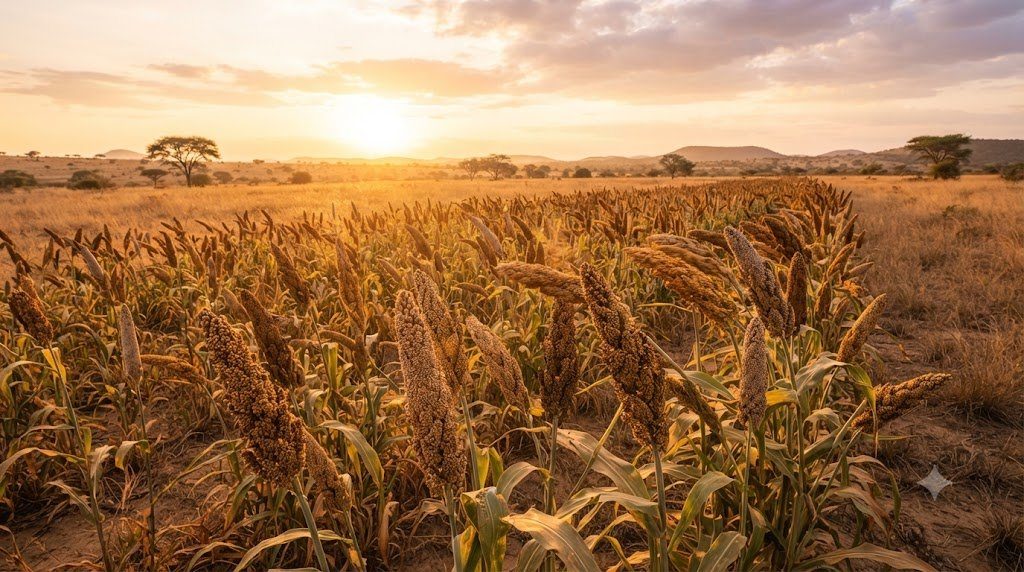
Ancient Grains for a Drying Planet: The Resilient Small Cereals
As global agriculture confronts expanding arid zones, depleting groundwater aquifers, and intensifying heatwaves, the world’s major cereal monocultures—maize, wheat, and flooded rice—are increasingly vulnerable to climatic volatility. In this precarious agro-ecological landscape, an ancient group of nutrient-dense, climate-resilient cereals is reclaiming central prominence: Sorghum and the Millets (Pearl Millet, Finger Millet, Foxtail Millet, and Proso Millet). Revering them as ‘orphan crops’ or subsistence foods of the drylands is a tragic historical miscalculation; physiologically, these species represent the most heat-hardy, drought-tolerant, and water-efficient cereal crops on the planet.
Domesticated millennia ago in the semi-arid Sahel of Sub-Saharan Africa and the rugged dry plateaus of the Indian subcontinent, sorghum (Sorghum bicolor) and pearl millet (Pennisetum glaucum) possess evolutionary adaptations that enable them to produce viable grain harvests in marginal sandy soils, high soil salinity, and blazing environments where temperatures exceed 42°C to 45°C (108°F to 113°F) and rainfall drops below 350 to 500 mm annually. Furthermore, their grains are nutritional powerhouses, containing superior concentrations of dietary fiber, slowly digestible resistant starches, and essential micro-minerals (Iron, Zinc, and Calcium) compared to polished white rice and refined wheat.
In this agronomic and physiological masterclass, we explore the specialized anatomical defenses of dryland cereals: leaf epicuticular wax crystallization, osmotic root adjustment, motor cell leaf rolling, C4 NADP-ME photosynthesis, the unique ‘Stay-Green’ delayed senescence phenotype, grain biofortification, anti-nutritional processing chemistry, and complete commercial production agronomy.
‘In grain sorghum, the ‘Stay-Green’ genetic trait allows the plant to maintain green, active photosynthetic leaf tissue during severe post-anthesis drought stress. While normal genotypes suffer premature canopy death and stalk lodging when water runs out, Stay-Green cultivars continue photosynthesizing, translocating sugars to fill grain heads and maintaining stem structural integrity until harvest.’
Drought and Heat Adaptations: Anatomical and Cellular Defenses
Sorghum and pearl millet survive brutal desert climates through an arsenal of coordinated physiological mechanisms:
- Epicuticular Wax Bloom: The leaves and stems of mature sorghum are coated with a thick, powdery white layer of Epicuticular Wax (Wax Bloom) composed of long-chain fatty alcohols, alkanes, and aldehydes. This crystalline wax barrier reflects excess solar radiation, reduces canopy heat load, and lowers cuticular transpiration to near zero when stomata are closed.
- Motor Cells (Bulliform Cells) and Leaf Rolling: Under soil moisture deficit, specialized large, bubble-shaped epidermal cells called Bulliform Cells located on the upper leaf surface lose water and turgor pressure rapidly. This cellular collapse forces the long leaf blade to curl inward into a tight protective cylinder, reducing exposed surface area to solar irradiance by 60% and creating a humid boundary microclimate that prevents desiccation.
- Deep, Fibrous Root Hydraulics: Sorghum develops an extraordinary root system, capable of penetrating over 2.0 to 2.5 meters (6.5 to 8 feet) deep into compacted subsoil layers. Sorghum roots feature dense layers of endodermal suberin that prevent water from leaking back into dry upper soils during hot days (hydraulic buffering).
- Cellular Osmotic Adjustment: When water availability drops, sorghum and pearl millet cells actively accumulate compatible organic osmolytes—principally Proline, Glycine Betaine, and Soluble Sugars. This osmotic adjustment lowers the intracellular osmotic potential, enabling root cells to pull water molecules away from dry soil particles that other crops cannot extract.
- Heat Shock Protein Synthesis: Pearl millet synthesizes specialized chloroplast chaperones (HSP70, HSP90) within minutes of temperature spikes, stabilizing thylakoid membrane enzymes and preventing photo-inhibition under scorching direct sunlight.
| Cereal Crop | Botanical Classification | Photosynthetic Pathway | Min. Annual Rainfall (mm) | Max Heat Tolerance (°C) | Nutritional Superpower |
|---|---|---|---|---|---|
| Sorghum (Great Millet) | Sorghum bicolor | C4 (NADP-ME) | 400 – 600 mm | 44°C (111°F) | Rich in polyphenols, 3-deoxyanthocyanidins, gluten-free |
| Pearl Millet (Bajra) | Pennisetum glaucum | C4 (NADP-ME) | 250 – 450 mm | 46°C (115°F) | Highest bioavailable Iron (Fe 45-75 mg/kg) and Zinc |
| Finger Millet (Ragi) | Eleusine coracana | C4 (NAD-ME) | 500 – 750 mm | 38°C (100°F) | Exceptional Calcium (344 mg/100g – 10x higher than wheat!) |
| Foxtail Millet (Kangni) | Setaria italica | C4 (NADP-ME) | 350 – 500 mm | 40°C (104°F) | High dietary fiber (8-10%), low glycemic index |
| Proso Millet (Cheena) | Panicum miliaceum | C4 (NAD-ME) | 200 – 350 mm | 42°C (108°F) | Ultra-short duration (60-70 days); lowest water requirement |
The Stay-Green Genetic Mechanism in Grain Sorghum
One of the most celebrated genetic discoveries in cereal physiology is the Stay-Green Phenotype (Stg1, Stg2, Stg3, and Stg4 QTLs) in sorghum:
- The Post-Anthesis Collapse Problem: In standard sorghum varieties, if severe drought strikes after flowering, the plant exhausts its water reserves. The canopy undergoes rapid chlorophyll degradation and total premature leaf senescence. The plant cannibalizes the structural sugars in its own stalk to fill grain heads, resulting in hollow stalks that buckle and snap under wind (charcoal rot and lodging).
- The Stay-Green Advantage: Stay-green sorghum genotypes possess modified root architecture and hormonal signaling (elevated cytokinin synthesis and reduced ethylene sensitivity). They extract soil water more conservatively during the vegetative stage, leaving residual soil moisture in deep subsoil horizons for the reproductive stage. As a result, the canopy remains vibrant green and photosynthetically active throughout grain filling, producing 20% to 35% higher grain yields and 100% lodging resistance under severe terminal drought!
- Biomass and Forage Dual-Purpose Utility: Because the stover remains green and juicy after the panicle is harvested, stay-green sorghums yield nutritious, high-sugar livestock forage, providing critical economic dual value in mixed crop-livestock farming systems of arid drylands.
Pearl Millet (Pennisetum glaucum): The Desert Warrior
Pearl millet is the ultimate survival cereal of the arid tropics, thriving where even sorghum fails:
- Soil Adaptability: Pearl millet grows vigorously in coarse, infertile, sandy soils with low organic matter (< 0.2%) and low water-holding capacity. It tolerates high soil temperatures (seedling surface temperatures exceeding 50°C / 122°F) that burn the shoots of other cereals.
- Developmental Velocity: Pearl millet is extraordinarily fast-growing, flowering in 40 to 50 days and reaching complete physiological grain maturity in 70 to 85 days. This rapid phenological cycle allows it to complete its life cycle during short, erratic desert monsoon rainy seasons, successfully escaping terminal drought.
- Heterosis in Pearl Millet: Utilization of cytoplasmic male sterility (CMS) systems (such as the Tift 23A cytoplasm developed by Glenn Burton) led to the development of commercial single-cross pearl millet hybrids yielding over 3.5 to 4.5 tons of grain per hectare under irrigation.
- Biofortification Success: Modern biofortified pearl millet cultivars (such as Dhanashakti) pack over 70 mg/kg of iron and 40 mg/kg of zinc, reversing anemia and stunting in rural populations dependent on cereal diets.
Finger Millet (Eleusine coracana): The High-Calcium Hill Staple
Cultivated across the elevated mountain regions of East Africa and the Deccan plateau of India, Finger Millet (Ragi) is a uniquely resilient small grain:
- Nutritional Superiority: Finger millet contains an astounding 344 milligrams of Calcium per 100 grams of whole grain—over ten times the calcium content of wheat or rice, and three times higher than cow’s milk per dry weight basis! This makes finger millet the premier infant weaning food and a powerful weapon against osteoporosis and childhood malnutrition.
- Grain Storability Without Chemicals: The pericarp of the finger millet seed is exceptionally hard and compact. Because of this dense seed coat, harvested finger millet grain can be stored in traditional underground granaries for up to 10 to 20 years without suffering infestation from grain weevils (Sitophilus species) or fungal decay, serving as the ultimate famine reserve insurance!
- Cultivation on Hill Terraces: Thriving in acidic soils (pH 5.0 to 6.5) with shallow profiles, finger millet’s fibrous adventitious root system binds fragile mountain slopes, preventing severe soil erosion during intense monsoon deluges.
Minor Millets: Barnyard, Kodo, and Little Millet Bio-Ecology
Beyond pearl and finger millet, three specialized minor millets offer extraordinary niche adaptations across marginal farming ecologies:
- Barnyard Millet (Echinochloa frumentacea / esculenta): Renowned as the fastest-growing cereal known to agriculture, producing mature grain within 45 to 60 days of sowing. It tolerates waterlogging and periodic inundation better than any other dryland small grain, acting as a rapid catch crop after disastrous early-season monsoon floods. Its grain boasts exceptionally low glycemic load and rich soluble fiber fractions.
- Kodo Millet (Paspalum scrobiculatum): An ultra-hardy survivor of shallow gravelly soils and chronic drought. Kodo millet contains dense concentrations of polyphenols and lecithin, providing natural anti-microbial resilience. However, during humid harvest conditions, kodo grain is susceptible to infection by Aspergillus flavus producing cyclopiazonic acid (‘kodo poisoning’), requiring rapid field drying and cleaning.
- Little Millet (Panicum sumatrense): Specially adapted to extreme drought and water scarcity, Little Millet thrives on bare rocky outcrops where topsoil depth is less than 15 cm. It provides dependable emergency food supplies in rain-shadow highland belts.
In-Situ Soil Moisture Conservation for Semi-Arid Grains
In rainfed drylands receiving less than 500 mm annual precipitation, agronomic success hinges on capturing every single raindrop where it falls:
- Broad Bed and Furrow (BBF) Architecture: Constructing 100 cm wide raised beds flanked by 50 cm wide, 15 cm deep furrows along a 0.4% to 0.8% grade. The furrows guide excess runoff slowly, eliminating gully erosion while maximizing lateral infiltration into the bed root zones.
- Tied Ridges (Basin Listing): Creating miniature earthen dikes (ties) across furrow rows every 2 to 3 meters. These micro-basins impound sudden torrential cloudbursts, preventing surface runoff and forcing water into deep subsoil storage for reproductive-stage root extraction.
- Organic Stubble Mulching: Retaining previous season crop residues (2.5 to 3.5 tons/ha of chopped cereal stover) across the soil surface suppresses midday soil surface temperatures by 6°C to 10°C, slashing evaporative water loss and fostering beneficial soil microbial biodiversity.
Anti-Nutritional Factors and Processing Chemistry
To maximize human nutritional bioavailability, dryland grains require proper processing chemistry:
- Tannins in Bird-Resistant Sorghum: High-tannin brown and red sorghum cultivars contain condensed tannins (proanthocyanidins) in the pigmented testa layer beneath the pericarp. While tannins protect mature field heads from bird predation and pre-harvest mold, they bind dietary proteins and digestive enzymes, reducing protein digestibility. Traditional decortication (polishing) or steeping in mild alkaline solutions (wood ash or lime) deactivates tannins. Modern white/tan-plant grain sorghums lack a pigmented testa and are tannin-free.
- Phytic Acid and Mineral Chelation: Like all whole grains, millets contain phytic acid (myo-inositol 1,2,3,4,5,6-hexakisphosphate), which chelates iron, zinc, and calcium, reducing gut absorption. Traditional processing techniques—Sprouting (Malting), Fermentation, and Parboiling—activate endogenous Phytase enzymes, breaking down phytates and increasing bioavailability of iron and zinc by 300% to 500%!
- Hydrocyanic Acid (HCN / Dhurrin) in Forage Sorghum: Young sorghum seedlings contain dhurrin, a cyanogenic glucoside that releases toxic hydrogen cyanide when masticated by cattle. Forage sorghum should never be grazed before plants reach 50 cm (20 inches) in height, by which stage dhurrin concentration dilutes to safe non-toxic levels.
Agronomic Management, Weed Control, and Harvesting Standards
Maximizing grain yields in small-grain dryland cereals requires precision field techniques:
- Seeding Depth and Stand Establishment: Millet seeds are minute (thousand-grain weight of finger millet is only 2 to 3 grams). Never plant millets deeper than 1.5 to 2.5 cm (0.5 to 1.0 inch)! Deep planting results in coleoptile exhaustion and total emergence failure in crusted soils. Use press wheels to ensure firm seed-to-soil hydraulic contact.
- Integrated Weed Management: Early-stage weed competition is devastating due to small seedling size. Apply atrazine at 0.5 to 0.75 kg/ha as a pre-emergence herbicide immediately after sowing sorghum or pearl millet to suppress broadleaf weeds. For finger millet, inter-row mechanical hoeing at 20 and 40 days after emergence keeps the stand clean.
- Pest Vigilance (Sorghum Shoot Fly & Head Chinch Bug): The sorghum shoot fly (Atherigona soccata) attacks seedlings within 3 weeks of germination, causing dead hearts. Treat seeds with thiamethoxam or imidacloprid prior to sowing to shield vulnerable seedlings.
- Harvesting and Threshing Mechanics: Harvest sorghum and millets when grain moisture drops below 16%. Sorghum heads mature from the top down; wait until basal spikelets reach the black layer. Store dried grain at 12% moisture in sealed hermetic bags or steel bins to prevent warehouse beetle and moth infestations.
| Crop Species | Seed Rate (kg/ha) | Optimal Row Spacing | Key Weed / Pest Target | Harvest Grain Moisture Target |
|---|---|---|---|---|
| Grain Sorghum | 7.0 – 9.0 kg/ha | 45 – 60 cm | Shoot fly; stem borer; Striga weed | 14.0% – 15.0% |
| Pearl Millet | 3.5 – 5.0 kg/ha | 45 – 50 cm | Downy mildew (green ear); blast | 13.0% – 14.0% |
| Finger Millet | 5.0 kg (Direct) / 3.0 kg (Nursery) | 25 – 30 cm | Blast (Pyricularia); finger rot | 12.0% – 13.0% |
| Foxtail Millet | 8.0 – 10.0 kg/ha | 25 – 30 cm | Broadleaf weeds; rust | 12.0% – 13.0% |
| Proso Millet | 10.0 – 12.0 kg/ha | 20 – 25 cm | Smut; early waterlogging | 12.0% – 12.5% |
Conclusion: The Cornerstone of Climate-Smart Food Sovereignty
In an era defined by groundwater depletion, rising global temperatures, and diet-related chronic health crises, millets and sorghum are transitioning from marginalized regional grains to the vanguard of global food security. Their extraordinary C4 photosynthetic efficiency, epicuticular wax shields, deep root hydraulics, and remarkable mineral densities represent nature’s ultimate agronomic defense against climatic adversity.
By investing in modern breeding, mechanization, and value-added consumer processing, global agriculture embraces these ancient super-grains, forging a resilient, biodiverse, and nourished future for humanity.